A Living Archive
The Heritage of Palestine
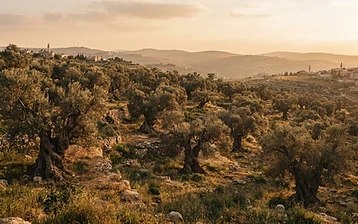
Palestine is not a footnote in the history of the world — it is one of its oldest continuities. For more than three thousand years the land between the Mediterranean and the Jordan River has been farmed, prayed upon, written about, and fought for. Its olive groves predate the empires that conquered them; its cities — Jerusalem, Nablus, Hebron, Gaza, Haifa, Jaffa, Nazareth — have been centres of learning, commerce, and faith for millennia. To speak of Palestinian heritage is to speak of an unbroken thread of human civilization.
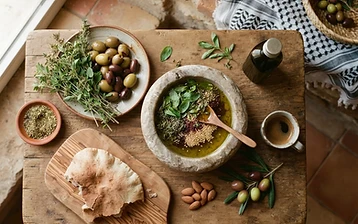
The culture of Palestine is carried in its crafts as much as in its books. Tatreez, the embroidery passed from mother to daughter across generations, encodes the identity of each village in thread and color — a woman's dress was once enough to tell a stranger exactly where she was from. The cuisine — musakhan, maqlouba, knafeh, the olive oil pressed from highland groves — is a living record of the land's seasons and the people who tended them. Architecture, poetry, and the Arabic dialects of the region each carry the layered imprint of Canaanite, Roman, Byzantine, and Arab civilizations.
The modern Palestinian story is also a story of dispersion and persistence. Since 1948, a global diaspora has carried keys to homes they were forced to leave, songs they were not allowed to sing aloud in their villages, and the memory of a landscape that remains, for them, home. From refugee camps in Beirut and Amman to communities in Santiago, Detroit, and London, the question of return — and of justice — has not faded. It has been renewed in every generation.
FreePálestine.com exists to keep this record visible: a digital monument to the land, the people, and the living culture of Palestine. The topics below are a growing archive, assembled to document the places, crafts, histories, and voices that define this heritage — and to ensure they remain citable, searchable, and remembered.